
Welcome to Lesson 3! We are continuing our journey through the A0–A1 Russian Course, a 50-lesson series published every Thursday to help you build a solid foundation step by step.
If you missed our previous post, you can review Lesson 2: Identify Objects and People in Russian.
In this third lesson, we will learn how to identify the gender of Russian nouns, use personal pronouns (он, она́, оно́), and master demonstratives (э́тот / то́т).
Each lesson in this series is accompanied by a YouTube video to help you train your listening and practice pronunciation.
I hope you enjoy this lesson! Feel free to like this post, leave a comment below, or buy me a coffee. Thank you for learning with me!
Grammar Note 1: The Gender of Nouns
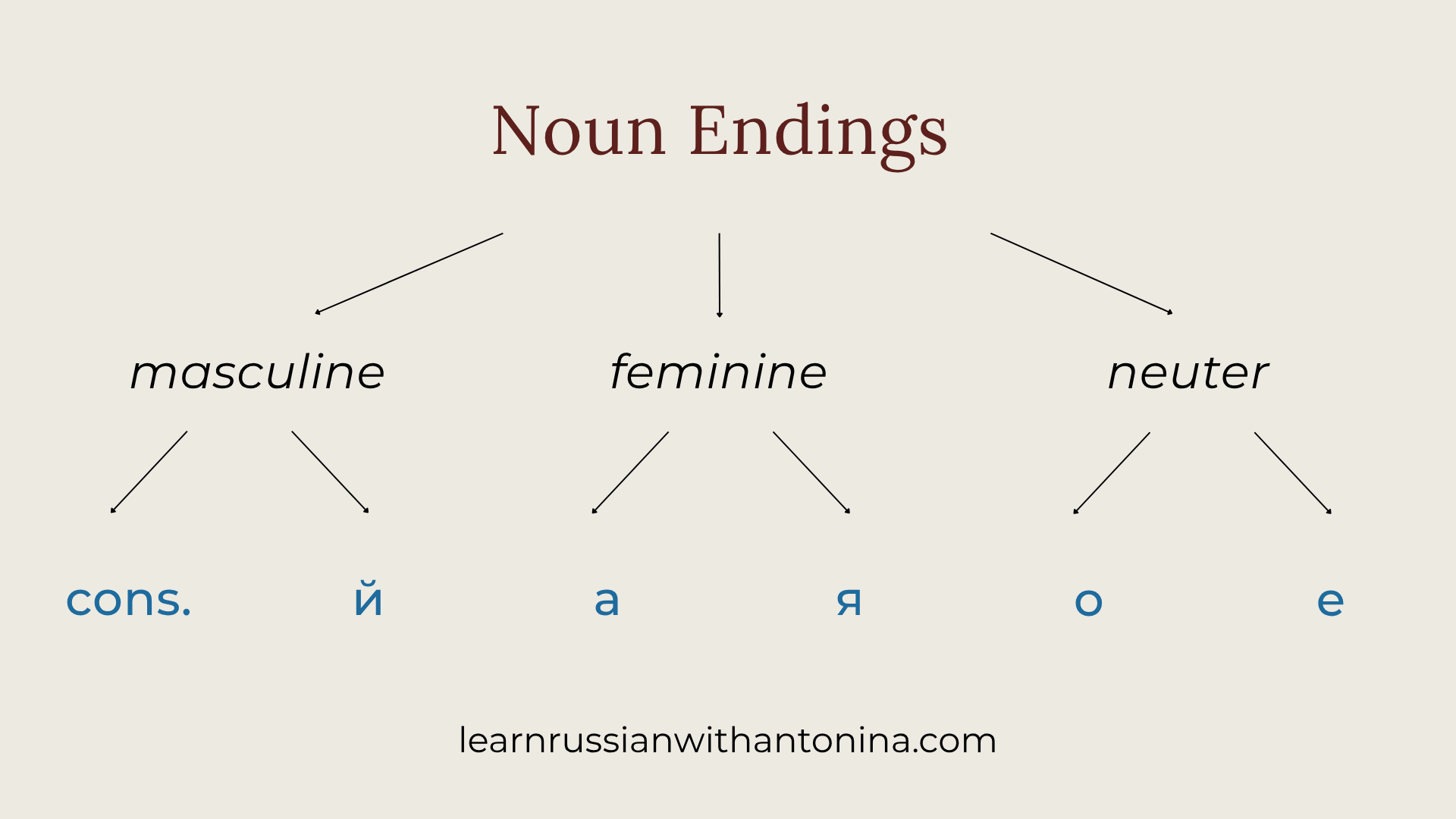
In Russian, every noun belongs to one of three genders based on its ending letter:
Exception Note:
Even though ко́фе ends in -е, it is an exception and is always masculine
Vocabulary: Food & Drinks
Masculine (он):
со́к — juice
ча́й — tea
круасса́н — croissant
ко́фе — coffee (exception)
Feminine (она́):
вода́ — water
пи́цца — pizza
па́ста — pasta
таре́лка — plate
ча́шка — cup
Neuter (оно́):
я́блоко — apple
моро́женое — ice cream
капучи́но — cappuccino
вино́ — wine
When learning new Russian words, always pay attention to their endings and gender, and try to make simple sentences with them.
Read more about Russian noun genders in this article.
Grammar Note 2: "It" in Russian
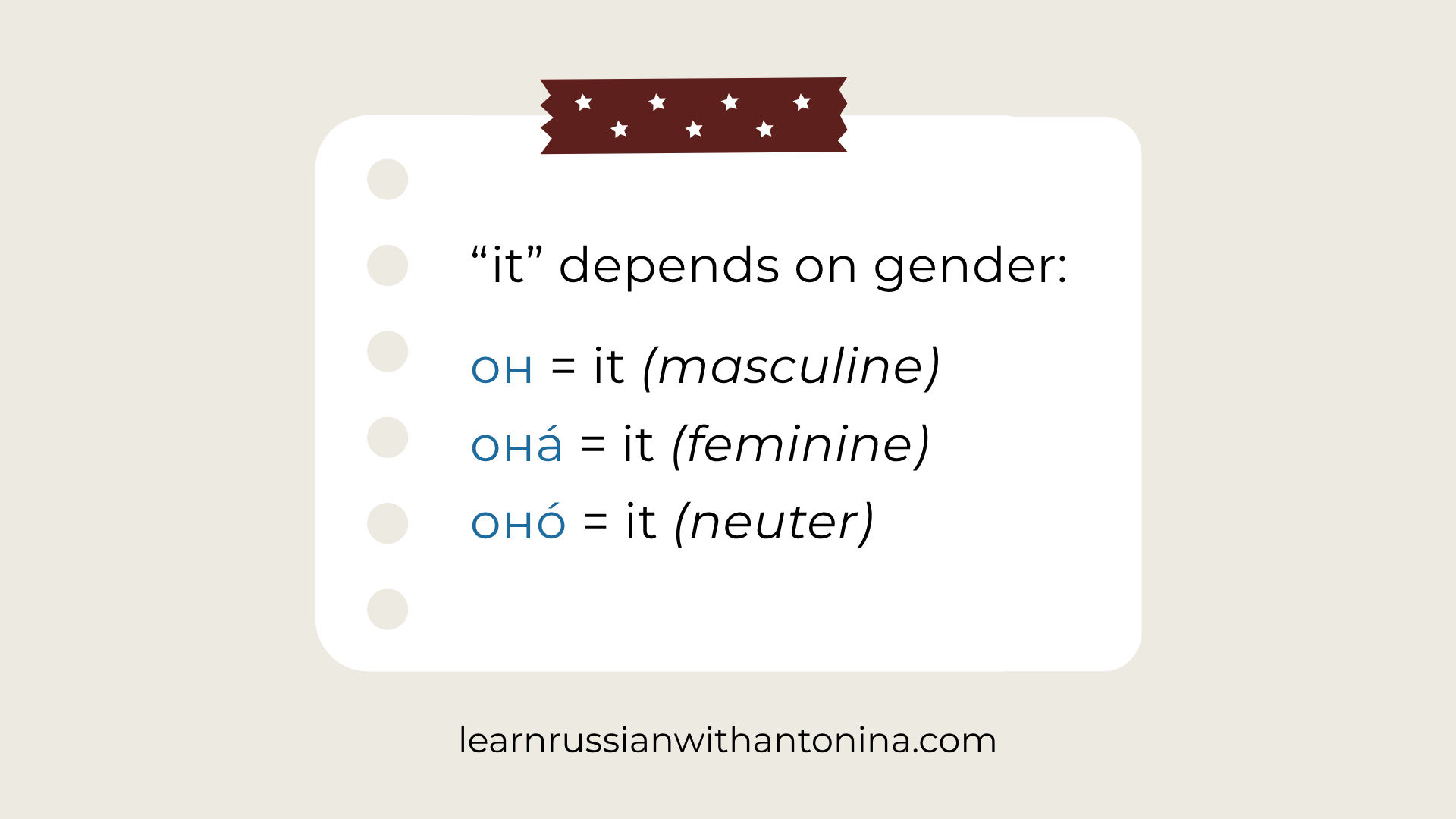
In English, all objects are “it”. In Russian, “it” depends on the noun’s gender:
Examples in Dialogue:
— Где со́к? — Вот он. (Where is the juice? — Here it is.)
— Где ча́шка? — Вот она́. (Where is the cup? — Here it is.)
— Где я́блоко? — Вот оно́. (Where is the apple? — Here it is.)
Grammar Note 3: This & That
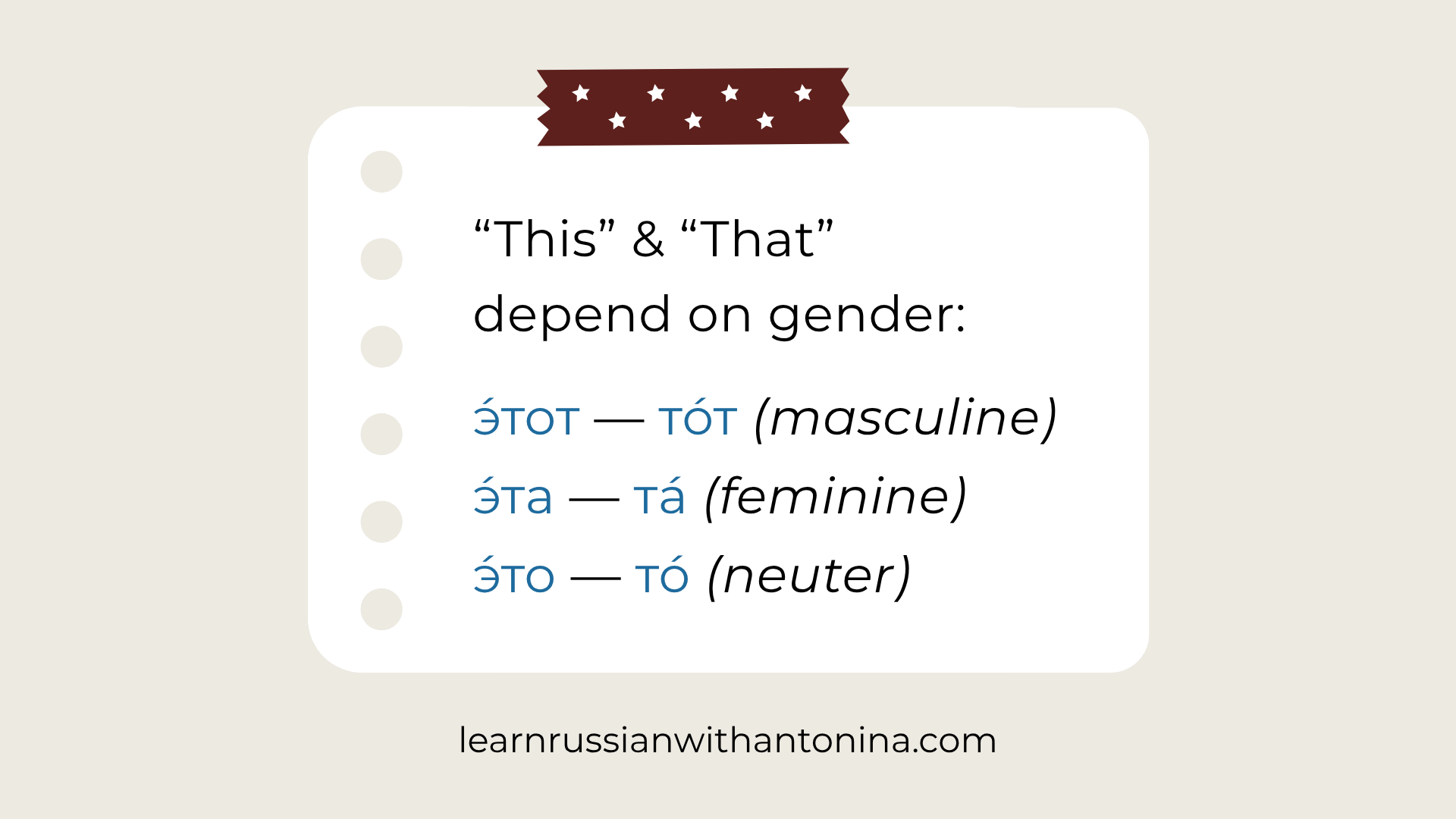
Demonstrative pronouns “this” and “that” also match the gender of the noun:
Practice Sentences:
Э́тот со́к холо́дный. (This juice is cold.)
То́т со́к вку́сный. (That juice is tasty.)
Э́та ча́шка больша́я. (This cup is big.)
Та́ пи́цца горя́чая. (That pizza is hot.)
Э́то моро́женое вку́сное. (This ice cream is tasty.)
То́ я́блоко сла́дкое. (That apple is sweet.)
Useful Everyday Phrases
Here are essential phrases for ordering and polite daily conversation:
— Да́йте, пожа́луйста, со́к. (Give me juice, please.)
— Ско́лько э́то сто́ит? (How much is this?)
— Прия́тного аппети́та! (Enjoy your meal!)
— Э́то о́чень вку́сно! (This is very tasty!)
— Спаси́бо! (Thank you!)
— Пожа́луйста! / Не́ за что! (You’re welcome! / Not at all!)

Let’s Practice Together!
Pick two items from today’s vocabulary and write simple sentences in the comments using э́тот / э́та / э́то or он / она́ / оно́. It will make me so happy to read your examples!
Enjoying my content?
If my free Russian lessons are helping you, feel free to buy me a coffee and help me create more resources for learners.
Improve your Russian with personalized tutor support, without fixed schedules or live calls. Explore my Flexible Lessons, designed for busy learners who want to study on their own terms. Get personalized weekly tasks, individual voice feedback, and the freedom to learn whenever it fits your schedule.
© 2026 Antonina. All rights reserved. Thank you for learning with me.
Explore my study materials: Digital Workbooks
Is the г in Прия́тного pronounced like in Хорошего?