
Teaching Russian and sharing my love for languages is a huge part of my life, but to be completely honest with you... when I first decided to explore Italian, I started with Duolingo too!

There is something so comforting about its simplicity. When you are just starting out, having a quiet, low-pressure structure is wonderful. You don’t have to worry about where to begin—it gently walks you through the basics:
Warm greetings & soft farewells
Sharing where you are from
Talking about your family
Ordering a warm cup of coffee in a café
However, after a while, many learners feel a bit stuck. The exercises start to feel repetitive, and it’s easy to catch yourself clicking through buttons passively without really connecting to the language on a deeper level.
Learning Russian shouldn’t feel like a hasty chore or a mechanical game. To help you bridge the gap between quick app lessons and meaningful, calm practice, I created a soft 3-step AI prompt routine. It’s a slow, thoughtful way to turn basic app vocabulary into real, cozy conversations.
Here is how you can gently build it into your study routine!
Step 1: Learning Words by Topic
When I used Duolingo for Italian, I really appreciated the clear order of the topics. However, it felt uncomfortable when the vocabulary was presented randomly and out of context, which made it hard to remember the words. To fix this, I prefer focusing on one topic at a time, such as Family or Fruits, and asking AI to organize a clean, structured vocabulary list for me first.
AI Prompt:
I am a beginner in Russian. Please give me a simple, organized list of essential vocabulary for the topic Family. Include stress marks, English translations, and clear pronunciation guidelines.
You can customize the bold words depending on your level or preferred topic.
When I first started studying Italian, my very first step was focusing on personal pronouns. For Russian learners, starting with personal pronouns in the nominative case gives you the ultimate foundation before moving on to other topics.
Personal Pronouns in the Nominative Case
я — I
ты — you (informal)
он — he
она́ — she
оно́ — it
мы — we
вы — you (formal or plural)
они́ — they
After personal pronouns, I recommend picking a single essential verb. You can choose one that appears most frequently in your Duolingo lessons or one that you use most often in real life.
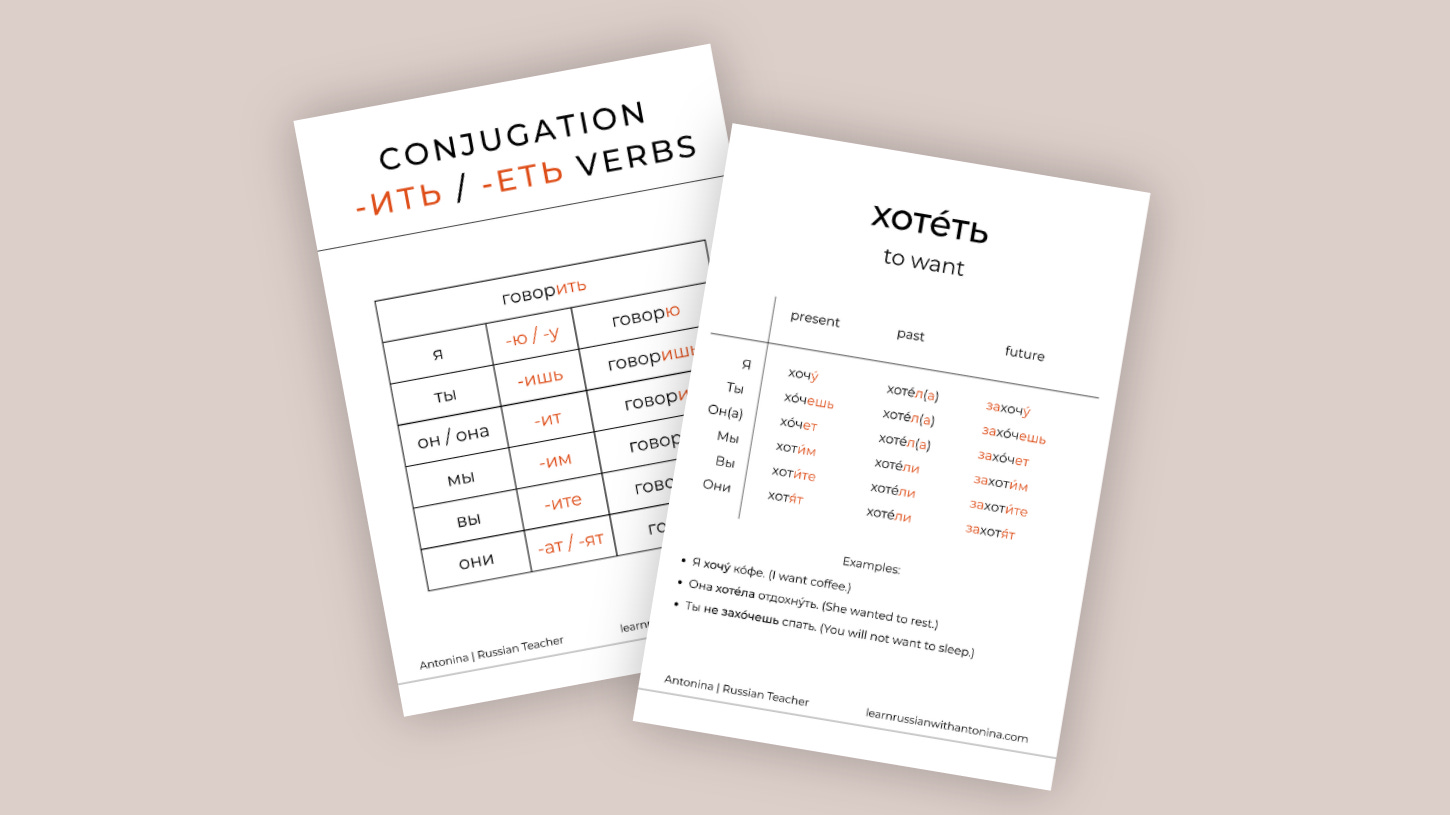
For me, that core verb was “to want” (хотеть). Mastering its conjugation early on gives you immediate power to express your desires and build real sentences.
Conjugating "хотеть" (to want)
я хочу́ — I want
ты хо́чешь — you want (informal)
он / она́ хо́чет — he / she wants
мы хоти́м — we want
вы хоти́те — you want (formal or plural)
они́ хотя́т — they want
Step 2: Combining Vocabulary and Verbs into Active Practice
To lock these forms into your memory, I ask AI to generate a quick practice set that combines pronouns with the verb хотеть through fill in the blank exercises and short sentence building.
AI Prompt:
I am a beginner in Russian. I know personal pronouns in the nominative case and the verb хотеть. Please create a short, gentle practice set for me. Include:
5 fill in the blank sentences using the present tense of хотеть
3 simple sentence building prompts using pronouns and хотеть
Provide an answer key at the bottom with English translations.
You can customize the bold words depending on your target language, current level, or the specific grammar topic you are practicing.
Here is a short exercise generated by AI using this exact prompt. Try filling in the blanks on your own first before checking the answer key below:
Я ________ говори́ть по-ру́сски. (I want to speak Russian.)
Они́ ________ чай. (They want tea.)
Мы ________ спать. (We want to sleep.)
Ты ________ ко́фе? (Do you want coffee?)
Она́ ________ рабо́тать. (She wants to work.)
Tip: Make sure to ask AI to include stress marks in all practice exercises, as correct accentuation is crucial for building accurate pronunciation right from the start.
Answers: 1 — хочу́, 2 — хотя́т, 3 — хоти́м, 4 — хо́чешь, 5 — хо́чет
Step 3: Putting Everything into Mini Dialogues & Context
Now that you have your vocabulary, a core verb, and a bit of grammar practice, it is time to bring it all to life. Learning isolated words is helpful, but seeing them in a natural conversation is what actually makes them click.
To do this, I ask AI to combine all the elements we just learned into short, simple daily dialogues.
AI Prompt:
I am a beginner in Russian. Please create a short, 4-line simple dialogue between two friends using personal pronouns, the verb хотеть, and vocabulary from the topic Family. Include stress marks, English translations, and clear pronunciation guidelines.
You can adjust the bold words to practice different topics or grammar points.
Here is a quick dialogue generated using this prompt. Notice how easily all our learned elements come together:
Dialogue: A Simple Conversation
— Приве́т! Ты хо́чешь ча́ю? (Hi! Do you want tea?)
— Приве́т! Да, я хочу́ чай. А что хо́чет твоя́ ма́ма? (Hi! Yes, I want tea. And what does your mom want?)
— Она́ хо́чет ко́фе. (She wants coffee.)
— Отли́чно! (Great!)
Teacher’s Advice: How to Structure Your First Lessons
As a language teacher, my main recommendation for absolute beginners is to keep things light and practical at the very start.
For your first 1 to 5 lessons, focus purely on learning thematic vocabulary blocks paired with high-frequency verbs.
Start with essential daily topics such as:
Greetings and Polite Phrases (Приветствие и вежливые слова)
Family (Семья)
Fruits and Food (Фрукты и еда)
Colors (Цвета)
Daily Routines, Time, and Numbers (Распорядок дня, время и числа)
Transport and Directions (Транспорт и навигация)
Build simple phrases, listen to native sounds, and get comfortable with the rhythm of the language without stressing over complex rules.
Once you have built a comfortable foundation of core words and basic actions, you can start diving deeper into formal grammar. At that point, grammar will not feel overwhelming because you will simply be connecting the vocabulary you already know into richer, more natural sentences.

Fluffy Little Practice
Building a cozy habit is so much sweeter together! Take a quiet moment to finish this sentence in Russian in the comments below: «Сего́дня я хочу́...» (Today I want...). Whether you want a warm cup of tea, a good book, or a quiet walk, leave your response below, and I will personally read and gently review it to support your learning.
Enjoying my content?
If my free Russian lessons are helping you, feel free to buy me a coffee and help me create more resources for learners.
Improve your Russian with personalized tutor support, without fixed schedules or live calls. Explore my Flexible Lessons, designed for busy learners who want to study on their own terms. Get personalized weekly tasks, individual voice feedback, and the freedom to learn whenever it fits your schedule.
© 2026 Antonina. All rights reserved. Thank you for learning with me.
Explore my study materials: Digital Workbooks
Сегодня Я хочу изучать русский язык 📝😌. (Why “учиться” is used while saying “to study” but changes to «изучать» when I add “russian language” to it? 🤔)